I wrote this essay in response to an entry written by a friend on a diary site we both inhabit. The bold italicized portions below come from her entry and where there are ellipsis in the italicized portions they come from the original; I have not edited the quotations lifted.
i'm a fundamentalist christian and i read harry potter.
i've just finished rereading the series in preparation for the relase of the HP 5 movie and the the final book of the series. one of my sons too is rereading the series and i've spent quite a bit of time talking online with friends about different theories and other silliness related to the stories.
it's funny because only 4 years ago, all things harry were banned from this house. i went right along with the idea that it was evil, confused kids and glorified things i don't believe in. okay i admit, it was an example of blindly following the council of men that was both unbiblical (yes) and not one of my finer moments.
I was also very slow to read the books. Slow because I don't jump on ANY bandwagon as it goes by; that's just not my nature. It's my nature to watch it, consider it, walk around it, kick its wheels, and then --if it appears to be a
good bandwagon-- gingerly climb onboard, assessing as I go. As I listened to people
talk about Harry Potter (my first exposure being in a bi-monthly zine that discussed fiction and what the various members were reading) I heard reasonable discourse, some speculation as to why Rowling's book had so captured the public imagination rather than
Sherwood Smith's Wren to the Rescue (which I quite enjoy), recognizing the "perfect storm" of marketing and timing that surrounded it, etc.
And then the Christian backlash. And then the backlash to the Christian backlash, which, I must say, has always seemed absurd to me on the face of it: you may freely disagree about whether a particular book is a bad influence (be it moral or spiritual or even regarding the proper use of language) but to disdain the very
idea that a book could influence the reader is absurd on the face of it.
those who know me and know my experiences can probably understand why i would have been wary. my own experiences with witchcraft are of the variety that would have the wicked witch of the west saying "damn, that's just wrong." i'd always been hyper careful with the subject of witchcraft and wizardry, even shunning tolkien and other authors because it just gave me the heebie jeebies.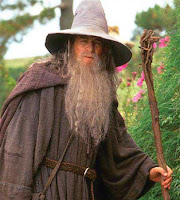
A friend of mine with an extremely abusive cult background (not the one I'm quoting here) started having great difficulty, being triggered in very negative ways, by reading the HP books outloud to the children she watched after school. I assured her it was okay to *not* read the books to the kids; that if they really wanted to read them, they could read the books on their own (or have their own mothers read to them).
And then I watched some friends become mildly obsessed. Obsession always alarms me a bit - it's not healthy or balanced. Doesn't matter whether it's Harry Potter or The Beatles of Angelina Jolie or The Lord of the Rings or computer games or pornography, obsession makes me take a few steps backward. I was obsessed with horses from toddler to 13 year old - it wasn't destructive but it wasn't balanced, either. And watching a handful of young adults develop an obsession with Harry Potter was a little unnerving; children's obsessions can only go so far but an adult's obsession can swing in a much wider arc... With a couple of these people there were contributing spiritual dynamics that increased my concern.
So standing back a good long while seemed like a reasonable choice.
 anyway... my husband and i had a conversation the other night about whether or not it was okay to continue being fans of the series and spoke aloud, for the first time, some of the things some of our fellow believers may have forgotten or ignored.
I finally decided to watch the first movie on DVD - and it was okay. I didn't have that sense of wonder that a fan would experience (you know, the joy of seeing something you've read about for years embodied on the big screen) but, on the other hand, it was a really fun introduction to certain concepts - like Platform 9 3/4! I hadn't read the book, so I wasn't disappointed by things that were missing, etc., and I wanted to see whether I understood the story well enough (one of the criticisms I'd heard from several corners was that the story was muddled by the screenplay). I felt I understood it. Waited a few weeks - was there any negative spiritual dynamic? None that I could perceive.

So I rented the second movie (3 were out at this point) and was really tickled to watch the same actors only a bit older-- very cool, I quite liked that. So then I rented the third movie and said, "awww-- it's a time travel movie!" So I actually had to buy a used copy.
But I still hadn't read any of the books and was still quite ambivalent (now I'm only somewhat ambivalent) when I drove to Durango a few years ago with my friend Diana & her daughter Sierra; we stayed with the sister of one of Di's close friends; this sister specializes in children's education and tutoring and assessments of gifted children. In the course of several days there Yvonna mentioned her fondness for Harry Potter. Again, Yvonna is a strong, Bible-believing Christian (as is Diana, as am I, etc.) and so I really picked her brain about the books. And she's the one who sold me - she said, "Rowling has written engaging, accessible books with all the fun of the boarding school environment, contrasted with wicked parent-substitutes and hideous cousin." Yvonna expressed her conviction that the books were highly moral and very clear about what is good and what is evil (--funny that in a world where even the church starts blurring those lines and waffling, it's the author of a children's fantasy series who draws a clear line).
So at some point in the fall of that year, I took out the first couple of books and started reading. I found J.K. Rowling a good writer with a fun sense of humor and her story engaging. I think it was late last year that I finally finished the sixth book - and I am looking forward to reading the seventh, when I can take it out from the local library! I don't anticipate buying the series unless the Folio Society in England decides to release them - then, if I can afford it, I probably would buy the set.
WHY, as a fan of the series, do I have ambivalence about Harry Potter which I do not have about
The Chronicles of Narnia or Tolkien's created world of Middle-earth? One of the powerful strengths of Rowling's creation is that Harry Potter's world is
almost our world: planes, trains, automobiles, computers, medicine, television, Christmas -
and a talent or genetic ability to witchcraft. Now if it wasn't witchcraft but simply a propensity toward levitation, I would have no problem at all. But
witchcraft bears the stigma of being condemned in both the Hebrew and Greek portions of the Bible. God warns His people about witchcraft.
It makes me feel like Indiana Jones

when he looks down into the pit and sees the floor moving with serpents and he rolls back and says, "Snakes-- why did it have to be snakes?"
Rowling's creation has
humans that can learn to become witches. Tolkien and Lewis have witches and/or wizards *but* they are not human. When humans attempt to embrace witchcraft in Lewis' creation, it is a very wicked behavior - which is in line with scriptural prohibitions. So Harry Potter isn't at a comfortable fantasy-arm's distance, but presses right up against The Real World. It is a strength and a problem. Is she encouraging children to embrace witchcraft? I don't know. I know there are kids who write to Hogwarts and ask to be admitted (the British Post Office has said so) and frankly if I felt misunderstood and abused and alone in my childhood life, Hogwarts would have looked wonderfully attractive - does that mean they are inclined to pursue witchcraft in reality?
I don't know. I sincerely hope not, because that would be tempting little ones to sin, which Jesus thoroughly condemns.

I actually think one of the big problems --at least for serious Christian readers-- may be when their children run up against the "You shall not allow a witch to live" scriptures. Huh? B-b-but Harry Potter? Hermione is a witch! I like those people; what do you mean, they wouldn't be allowed to live in ancient Israel? God says they have to die?
Then God is a big meanie. By blurring the lines between a work of fiction, a fantasy world, and the Real World in which we live, Rowling creates a very real tension between God's clear instruction that His people are NOT to seek knowledge or guidance from any spiritual/supernatural source other than Himself. I fear the Potter books may interfere with the ability of some children to "taste and see that the LORD is good."
And that's a big problem.
if it is creating confusion, i have to wonder why. is it not the responsibility of the parents, no matter what their spiritual beliefs, to lay a solid foundation for their kids? if the parents are confused, the kids will be confused... no matter what the religious affiliation.
if harry potter is confusing christian kids, then perhaps it is because there's been too much focus on the law of the Word and not enough on faith and the change of self it is meant to create and support. if you're more interested in what the bible says to do than in who it says we are to be then yeah... there's going to be confusion. with or without harry potter.
 i don't think john wishing he could transfigure our tabby cat to a declawed kitty is a sign he wants to be involved in or believes in witchcraft. he also wishes he could be a transformer.
magical thinking (as it is known in psychiatric terms) is a normal part of childhood. as parents, it is our responsibility to lay a foundation of truth that will not crumble when our kids grow out of the belief in superheros. a foundation of belief that will be unshaken when the realities of life begin to make themselves known.
if we haven't, that's our fault. not J. K. rowlings.
Of course it is the responsibility of the parents to bring clarity. But as a child raised in a seriously Christian home who *still* got demonized in early childhood, I'm very aware of the dangers and pitfalls and the complete lack of mercy with which the enemy goes after children - and very specifically targets Christian children (why target the kids who aren't even being taught about God? They're much less likely to grow up into Christians... from the enemy's perspective,
those kids already belong to him).
Confusion is not easily dismissed. For instance, it took me a long time to understand the whole Acts 16 thing - if this spirit is testifying to the truth, why does Paul cast it out? Because 1) the presence of that spirit in the girl is an offense to God and the freedom which He created humans to enjoy and 2) the spirit is self-serving; it is trying to increase its credibility within the community so that it will be more powerful when Paul & Luke and all leave the area; it is entirely parasitic and opportunistic.
I don't think these books could encourage satanism (well, unless a reader finds Voldemort and Malfoy attractive and wishes to impose their will upon others; the true mark of satanism:
I can make you do what I please) but I think the books make witchcraft appealing, and that's problematic. One can argue that witchcraft, in the Hogwarts setting, is scholastically appealing and therefore might as well be chemistry or physics. But it's not chemistry or physics, it's witchcraft and the word itself is loaded. It is disingenuous to expect readers and critics to strip the historic meaning of the word from Rowling's use of the word.
My friend offered a statement and responded:
"it's just not of God" - the bible says we are in the world but not of the world. as much as i respect the amish, i couldn't live as they do. if i were to be diligent and wholehearted about shunning 'things of this world' i'd have to take a step further than the amish and live in a cave. there are many things not of God that can still be positives in our lives... when used properly.
I think that argument would be fine if these were books about linguists or chemistry majors or football players. But these are books about children attending a school that teaches them how to be wizards and witches. The problem really does boil down to the fact that that God instructs us, in the strongest possible terms, to avoid sorcery, witchcraft, divination, mediums, astrology, spiritists. Thus I would argue there are three categories: of God, of the world, and of the forbidden. What if these were books about adolescent boys exploring their sexuality with each other in a fun, bath-house kind of boarding school atmosphere? All the clear "good/evil" divides could still exist - rape is evil but consenting orgies are fun. Fewer Christians are willing to stand up and say, "homosexuality is not compatible with Christian life" and yet I imagine my friend would not allow her sons to read the series if the death-penalty offense was homosexuality and not witchcraft. Once again, unlike Tolkien or Lewis, Rowling's creation makes the idea of being a wizard attractive and
possible - and who wants to be a muggle, anyway?! I'm actually not very bothered by the racism in the books (muggle vs. magical) because I think it adds three-dimensionality to her world; the degree to which the reader engages with that attitude I find problematic in the same way that descendants of African slaves find "Uncle Tom" attitudes or behavior problematic.
if we've done our job as parents, we can use even this series of stories to build on the lessons we seek to teach.
love is by far, the greatest thing.
death is not to be feared.
there are things far worse than death.
keeping hold of the good can repel the bad (dementors are a powerful example)
evil exists, no matter how some may choose to remain blind.
to name only a few.
fact is, harry potter is responsible for the literacy of a generation. it's certainly responsible for my kids' growth as readers. and you know what? they've grown interested in the bible. something i doubt would have happened if their reading abilities hadn't progressed to the point they could understand the language.

I agree; there is so much positive good in these books and they're great springboards for discussion. And they have gotten kids to read (including big kids!) who were never excited about reading before - and THAT is WONDERFUL. I just don't think that erases the problems.
And so yes, even though I've now read the books (6) and have seen the first four films (and enjoyed them), I am still ambivalent.
*sigh*
comment imported from defunct blog:
yraiym Says:
June 12th, 2008 at 10:04 am
Hi Lynn,
I started reading the books the summer the fourth book came out; my mom had the books, and I read through them in about a week. I liked them, and found the beginning of the first book enchanting: the very sound of the first chapter, The Boy Who Lived, lent a new wonder to Baby Jesus’ escape from Herod.
While I didn’t see the great, deep evils in them that were being purported by some who had never read them — children could NOT learn to do witchcraft from reading these books (it takes a special ability which one is born with; one needs a wand made with a magical core substance that doesn’t exist; there are creatures and plants that don’t exist in our world, etc.) — I did see some other dangerous things in the books as the series progressed.
One great problem that for Christians is that she does not have an orthodox view of Christianity. Potter dies — but does he? He only seems to die, and pretends to be dead until the right moment (docetism!). Dumbledore is betrayed and killed — or is he? He arranges his “betrayal” ahead of time with Snape (sounds like the Gospel of Judas, a gnostic gospel). I can see how these elements of the stories that echo orthodox Christianity could be very confusing for children, and could subtly influence their views of Scripture and what really happened. I’ve seen it before — there is a Russian novel, The Master and Margarita, which has led a few generations of Russians to the firm belief that Jesus was crucified because Pilate had a migraine that day.
I *think* if I ever have children I will discourage them from reading these books until they are at least in junior high and can begin to hold more reasonable discussions. I certainly hope to have the sort of relationships with my children where we can discuss things like these books, and dissect truth from lies.
But all that said, like you I see deep problems with the books, but still enjoy reading them.
Grace
 One of the most amazing stories from Oliver Sacks' book, An Anthropologist On Mars: Seven Paradoxical Tales,
 is "To See And Not See" and it gives us a glimpse into the remarkable miracle of ordinary, garden variety, everyday sight. Couple that with Dr. Paul Brand's observations from The Gift of Pain
 (essentially a re-release of Pain, The Gift Nobody Wants) and you suddenly realize that virtually everything you know --or think you know-- is processed by an organ without any senses of its own, encased in a dark box. And, if you think about it too long, it really freaks you out a bit...